48% manufacturing teams consider material handling and end-of-line strategic priority for automation, and it’s obvious why. End-of-line is often the most underestimated stage of the packaging process, yet it’s where value is most easily lost. Bottlenecks in case packing, labeling, or palletizing ripple backward through the entire operation, eroding throughput, increasing product damage, and compounding labor inefficiencies.
As manufacturing teams adapt to changing business conditions, end-of-line packaging automation has become a critical part of the response. Flexible, easy-to-deploy line automation is indispensable for combating rising labor shortages and SKU proliferation. The challenge is that traditional approaches haven’t kept pace. Fragmented systems from multiple vendors create complex integration requirements and long-term operational friction.
Finding a better approach to end-of-line automation starts with asking the right questions in the evaluation phase. Here are most common questions successful automation teams ask when automating their end-of-line operations.
1. Is the payback on End-of-Line packaging automation worth the effort and what can be automated?
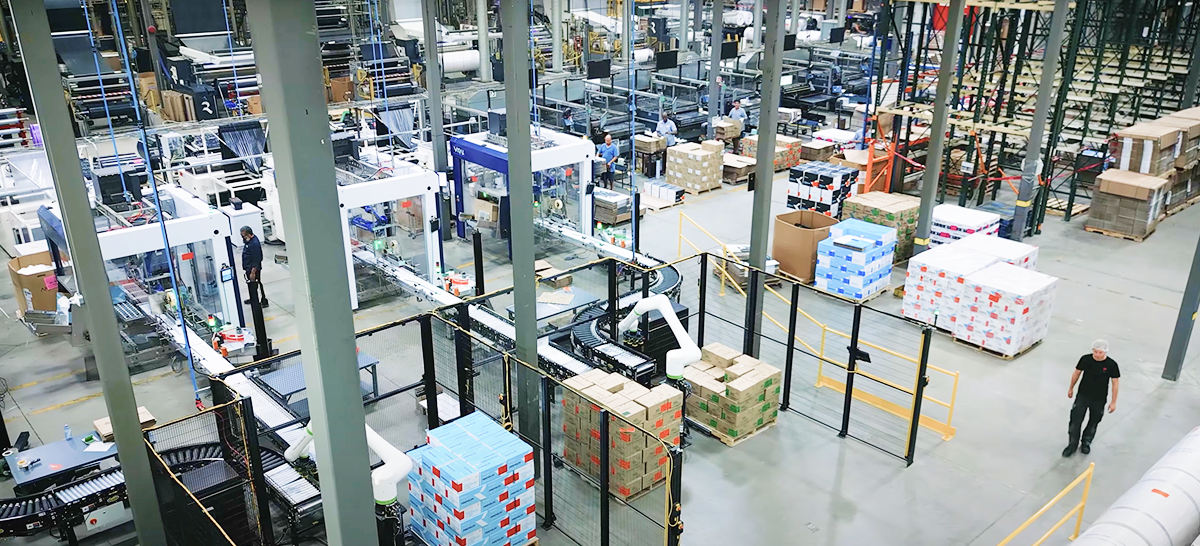
Automating the end-of-line packaging process has proven benefits. Manufacturers automating end-of-line packaging can boost their throughput by 30% and reallocate up to 10 full-time operators to higher value tasks. An automated end-of-line strengthens supply chain performance by improving packaging consistency, reducing shipping errors, and increasing traceability. With flexible automation systems, manufacturers can scale production and adapt to changing demand more easily.
End-of-line packaging automation covers the final steps of production where products are prepared for shipping or retail distribution.
A typical end of line automation includes the following
- Case Erecting
- Case Packing
- Case Sealing
- Labeling
- Wrapping
- Conveyors
- Palletizing
2. Why are more manufacturers prioritizing end-of-line automation now?
In the latest report by Vention and Industry week, nearly half the manufacturing teams reported evaluating end-of-line automation as a strategic priority. The urgency comes from a combination of labor pressure, rising product complexity, and higher customer expectations.
Packaging operations have become significantly more demanding over the last decade. Product lines have expanded, SKU proliferation has increased by 50% in the last decade according to McKinsey estimates, and production teams are being asked to move faster while maintaining quality. At the same time, repetitive manual roles such as palletizing and packing remain some of the hardest positions to staff and retain.
Automation helps stabilize this part of the operation. More importantly, a modular platform like Vention’s allows manufacturers to start solving these challenges immediately, without waiting for a facility-wide transformation.
3. Where should manufacturers start when automating end-of-line?
For most manufacturers, palletizing is the logical starting point for end-of-line packaging automation, as it addresses the most physically demanding and repetitive part of the process.
It is also where labor shortages tend to create the most immediate production bottlenecks. As per the US Bureau of Labor statistics, the industry is expected to add over a million manual packing roles per year. Automating palletizing can unlock immediate throughput gains while reducing strain on operators and improving consistency.
This is why many manufacturers start with Vention’s Rapid Series Palletizer. It offers a faster path to automation by combining industrial-grade performance with software simple enough for operators to manage internally. More importantly, it creates the foundation for future expansion into conveyors, case packing, and sealing, all within the same ecosystem.
***
Download All Ten FAQs for End of Line Packaging
Want to get a shareable version of our end-of-line packaging FAQs? Download the expert guide to get answers to the top ten questions.


