Scaling Craftsmanship: How The Horizon Group, Inc. Automated Their Sanding Tasks
How The Horizon Group, Inc. eliminated monotonous tasks to focus on complex fabrication.
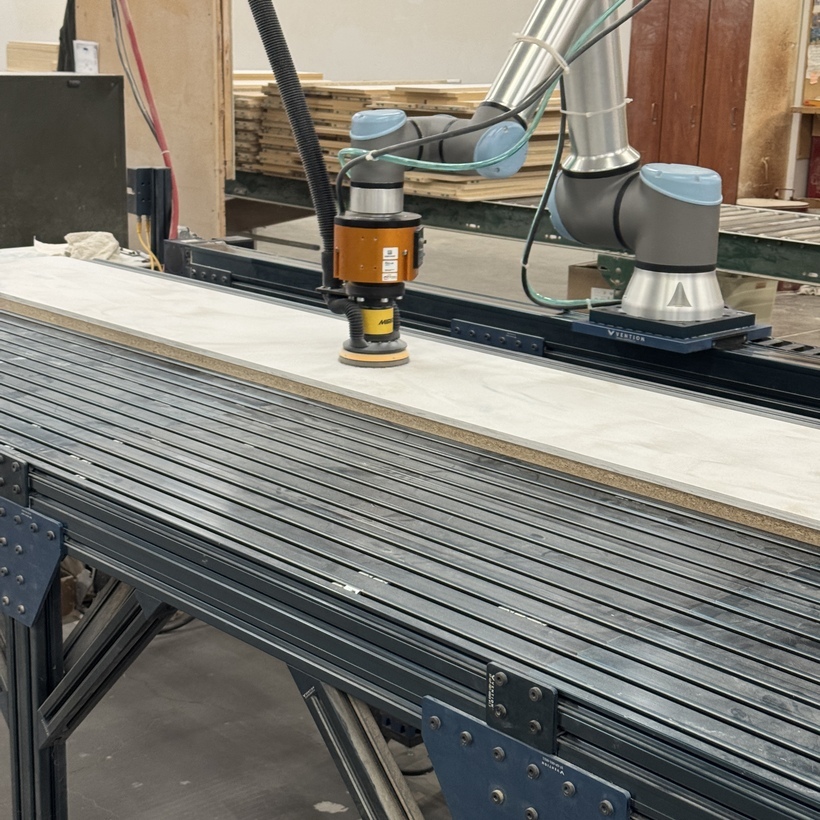
Story Highlights
Avoiding the Legacy Trap: The Horizon Group, Inc. specifically sought a solution that wouldn’t leave them “stuck” with a product difficult to maintain without outside help.
Collaborative Design Process: The system was tailored to company’s space and budget through iterative conversations with Vention experts.
Sanding Mesh Longevity: A significant reduction in consumable costs compared to traditional manual sanders.
Strategic Labor Shift: The automation allows custom builders to focus on fabrication while the robot handles large-batch of wood or solid-surface material panels.
The Problem
The Horizon Group, Inc. needed to remove monotonous, repetitive tasks from their skilled craftsmen to increase production capacity without increasing their total headcount. They spent years searching for a solution, finding that “out-of-the-box” options didn’t fit their needs, while custom third-party builds were either too expensive or risked becoming rigid “legacy systems” that would be hard to update.
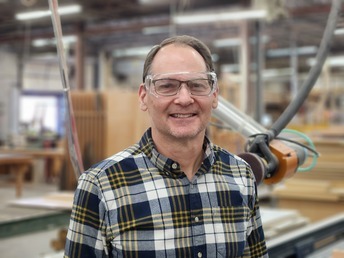
""The Vention team was instrumental in designing a solution tailored to our specific space and budget; we needed an adaptable platform that removed monotonous tasks from our skilled craftsmen without the risk of getting stuck with a product that is difficult to update or maintain.""
The Project
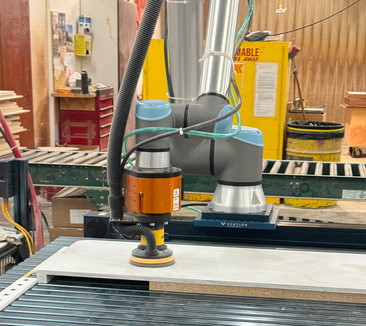
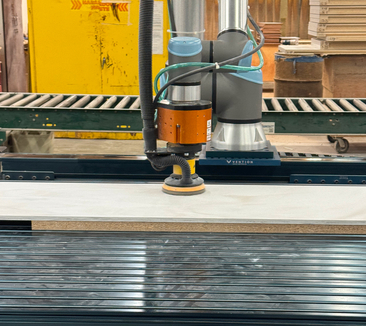
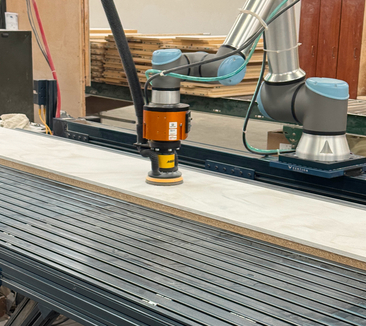
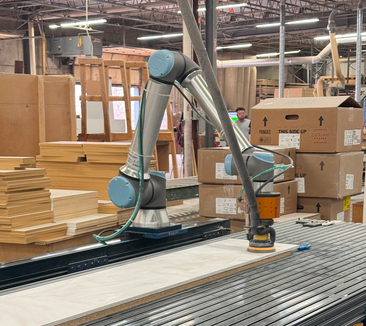
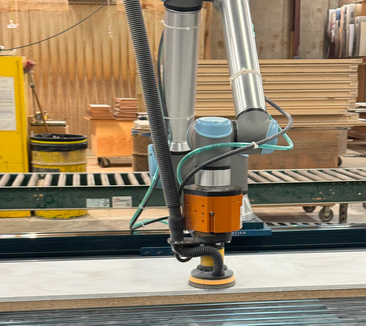
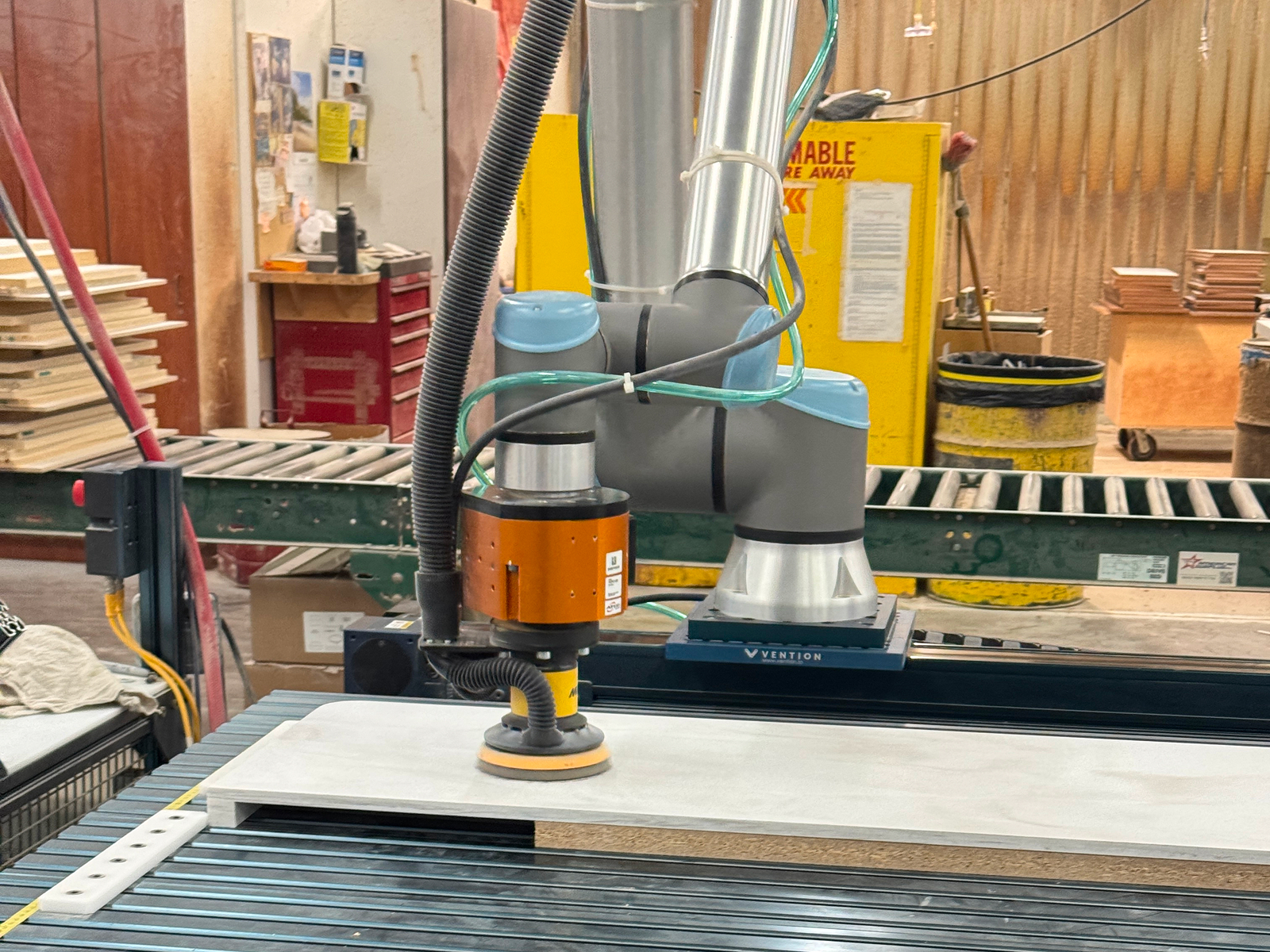
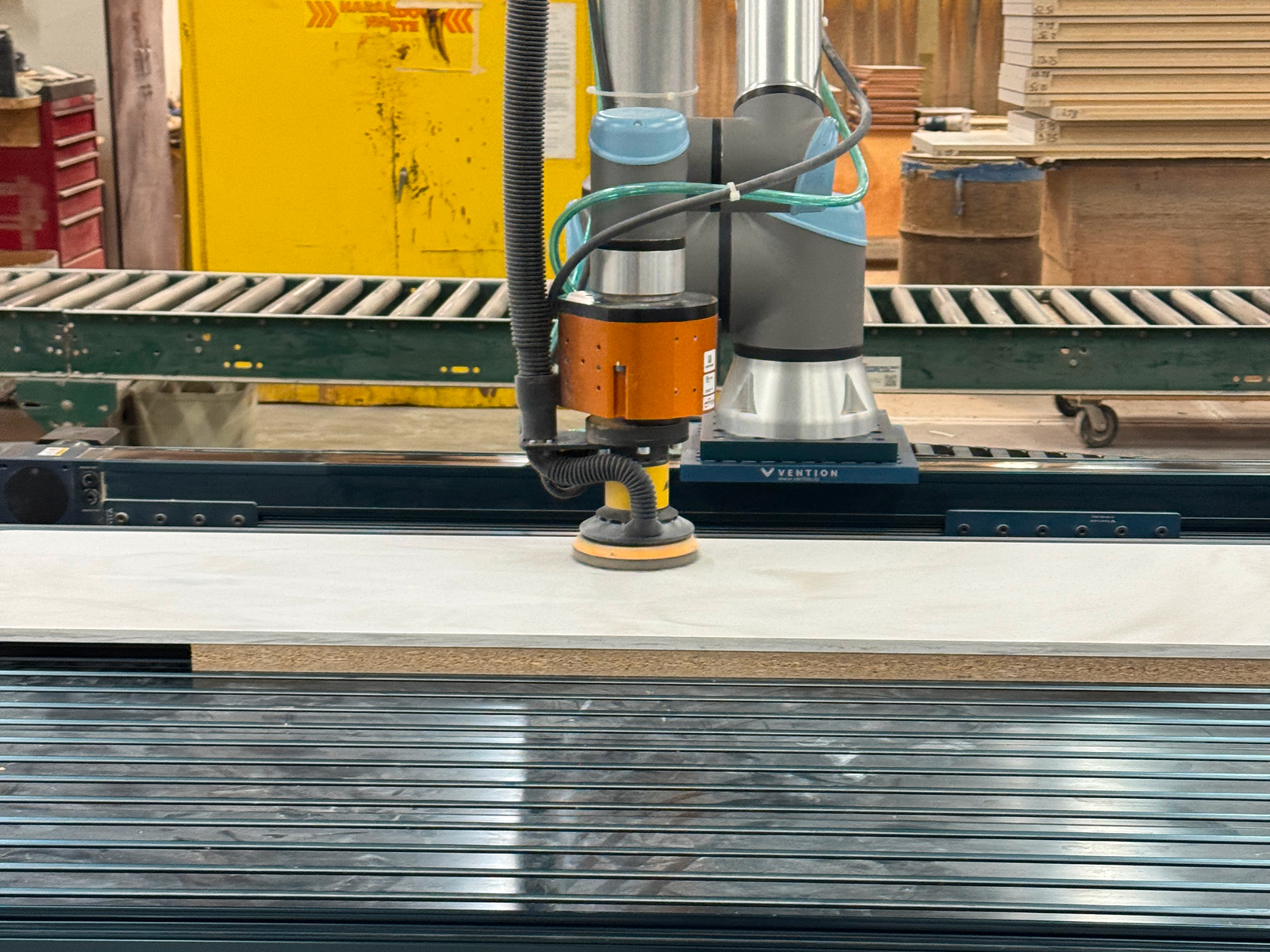
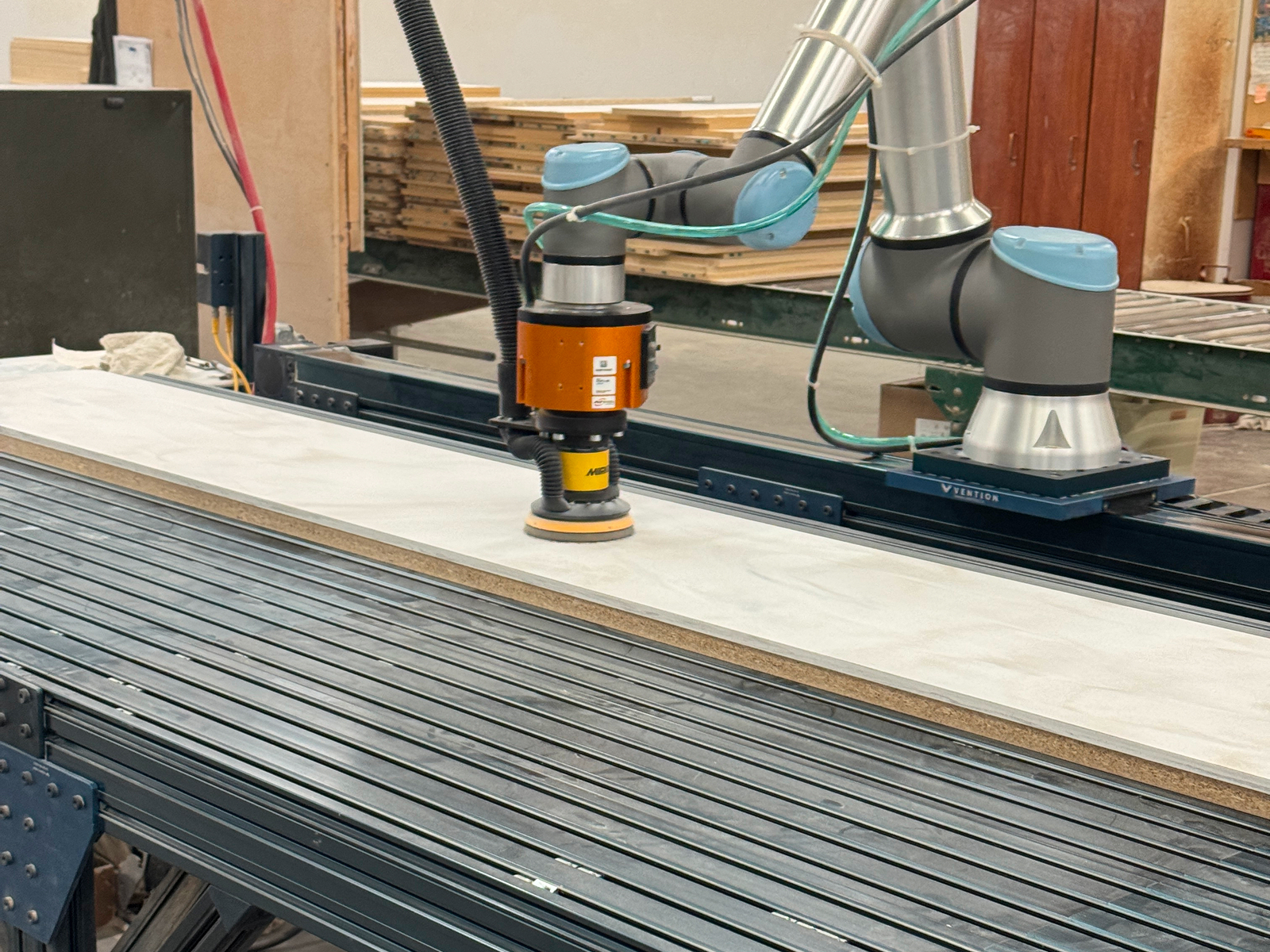
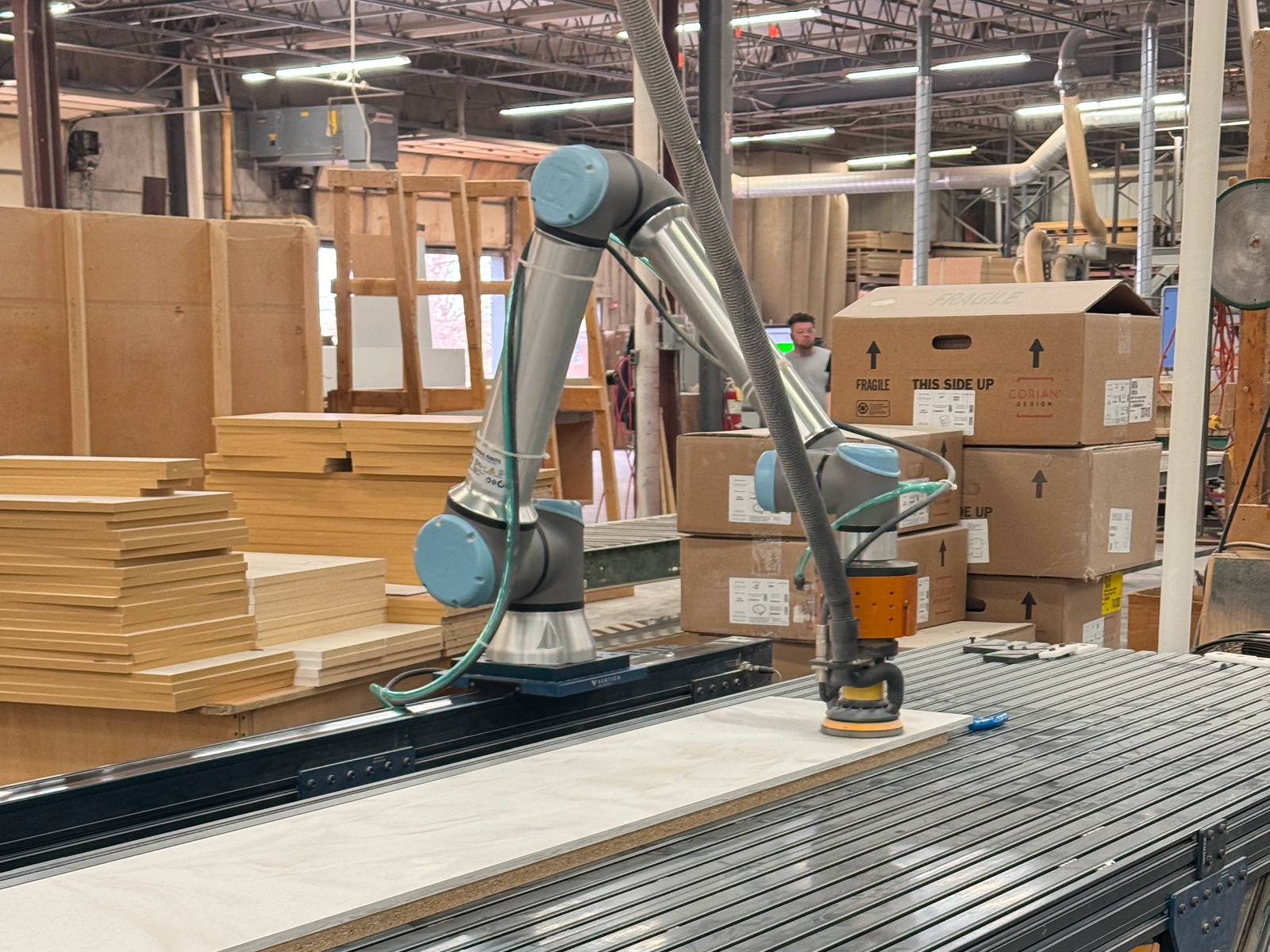
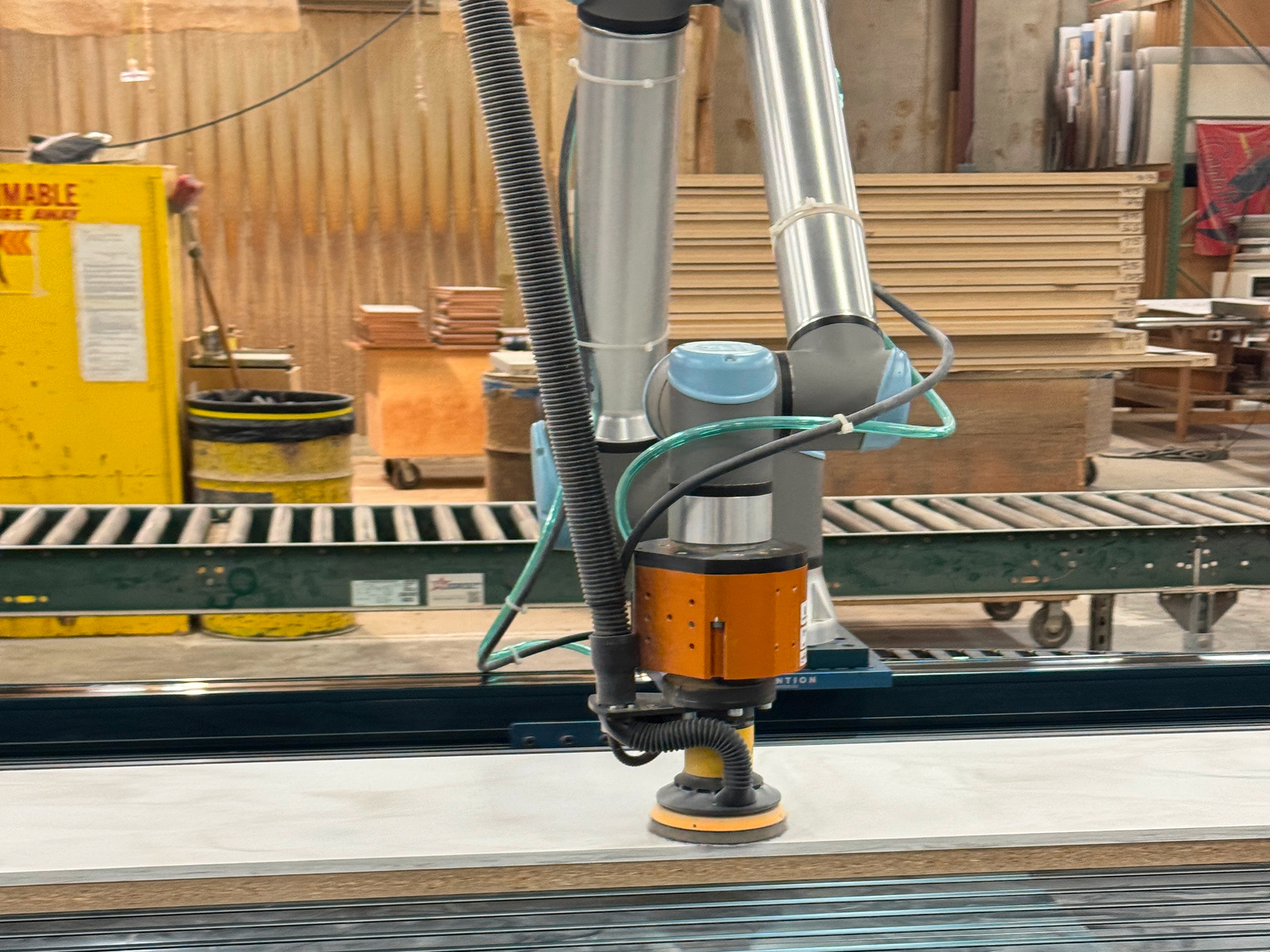
The project began with a web search that led The Horizon Group, Inc. to Vention. The process was highly communicative; a sales representative worked through a series of conversations to design a system that fit their specific budget and physical shop constraints. A key design phase involved adding a linear rail to ensure the robot could cover the necessary distance. To refine the deployment, the team added a 6mm pad to the actuator to better absorb height differences and prevent the tool from digging into edges.
The Results
The Horizon Group, Inc.’s transition to automation has successfully redirected its skilled builders from repetitive, monotonous tasks toward complex fabrication. While the team does not currently track specific percentages, they have confirmed that the automated sanding mesh offers superior longevity and cost-effectiveness compared to traditional equipment. The system has proven particularly effective for high-volume batches of uniform wood and solid-surface material panels, allowing the custom and finishing departments to maintain production levels without increasing headcount or relying on rigid legacy systems.
Project Specs
Want to Test the Quality of Robotic Sanding On Your Doors?
Send Us Your Doors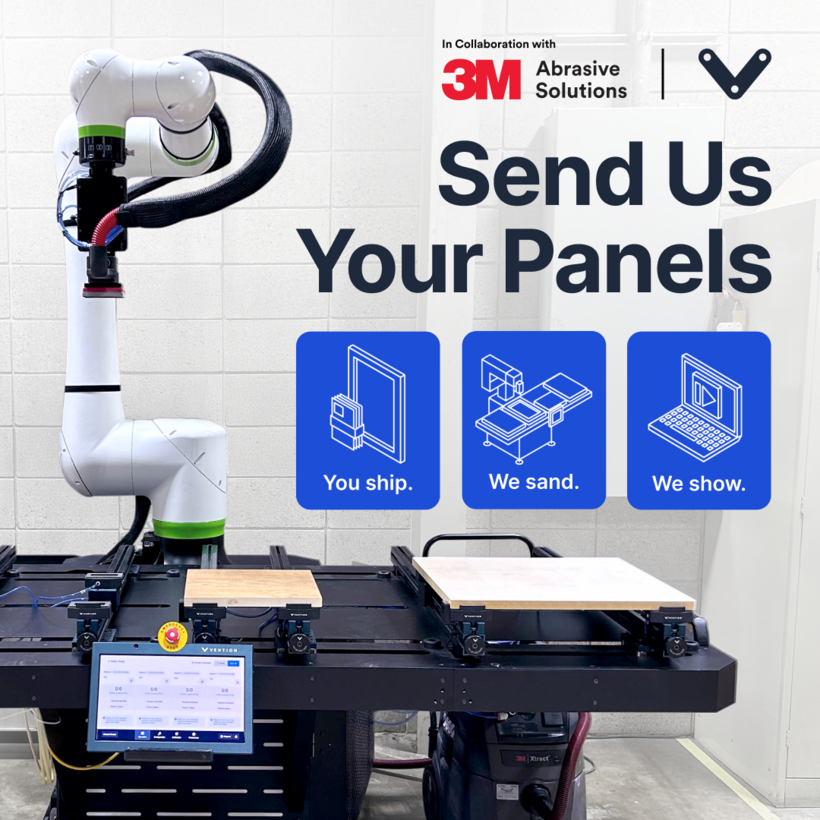

Similar Stories
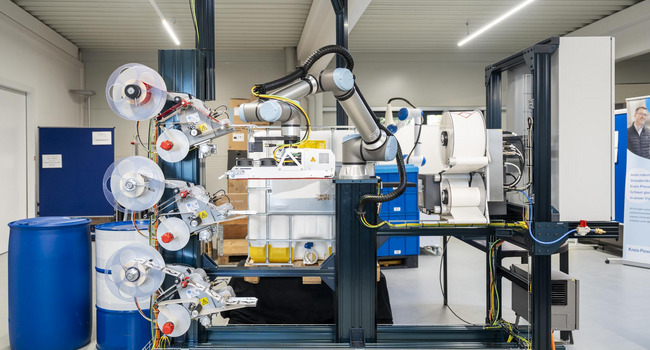
How Moin Robotics Boosted Productivity by 25%
Moin Robotics streamlined a chemical contract filler’s operations by replacing manual, error-prone labeling with the vision-guided MoinLabelBot. By leveraging Vention’s modular ecosystem, the team bypassed traditional fabrication to achieve an impressive 15-week speed-to-market. The system utilizes adaptive intelligence to precisely label offset containers, resulting in a 25% productivity increase. This automation reallocated one operator per shift and is projected to deliver a 20-month ROI. Ultimately, the modular design provides a future-proof solution that easily adapts to evolving container and label formats.
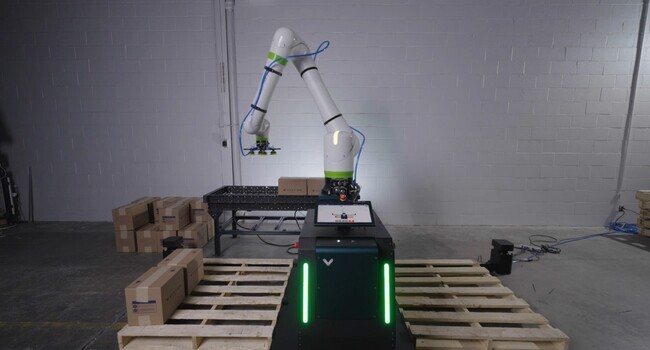
Modernizing Confectionery Production with Agile Automation
A global leader in the consumer packaged goods (CPG) industry is driving a massive modernization effort across its manufacturing footprint. By establishing a dedicated automation task force, the company is moving away from labor-intensive manual processes toward a high-mix, high-reliability production environment.
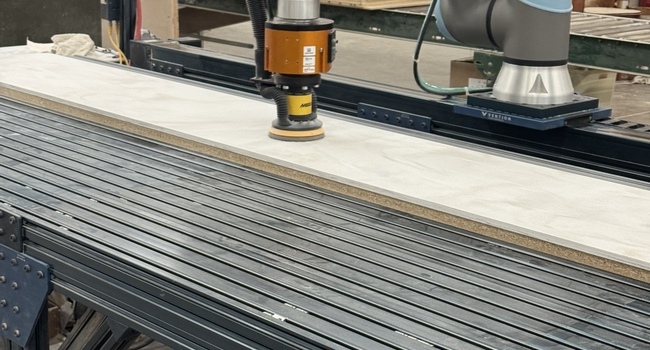
Scaling Craftsmanship: How The Horizon Group, Inc. Automated Their Sanding Tasks
The Horizon Group, Inc. sought a way to remove repetitive, monotonous sanding tasks from its skilled craftsmen to increase production capacity without adding headcount. By leveraging Vention’s MachineBuilder software and UR10 Cobots, they developed a custom-tailored system that fits their specific shop constraints and budget. The project resulted in a 100% reallocation of skilled labor toward complex fabrication, a 20% increase in project efficiency, and significantly improved consumable longevity compared to traditional manual equipment.
Bright IA Achieves Cycle Times Under 10 Seconds with Custom Tending
Discover how Bright IA engineered a flexible multi-machine tending work cell using a FANUC CRX-10iA cobot and Vention’s modular platform to manage five different adhesive cartridge formats.