As we close 2025, the final quarter reflected the broader adoption of manufacturing automation platforms and AI that was seen throughout 2025. Specifically, we showcased tangible progress in AI driven execution, deeper developer control, and new research that shows why platform-based automation is essential to bridging the adoption gap.
For manufacturers planning their 2026 strategies, the quarter’s highlights affirmed two meaningful themes: that automation platforms are core competitive advantages and that Physical AI’s readiness is being defined by factory-ready industrial robots, not humanoid concepts.
Below are the key highlights from the past quarter and what they mean for manufacturers in 2026.
Advancing Physical AI: The Next Stage of Vention’s AI Platform
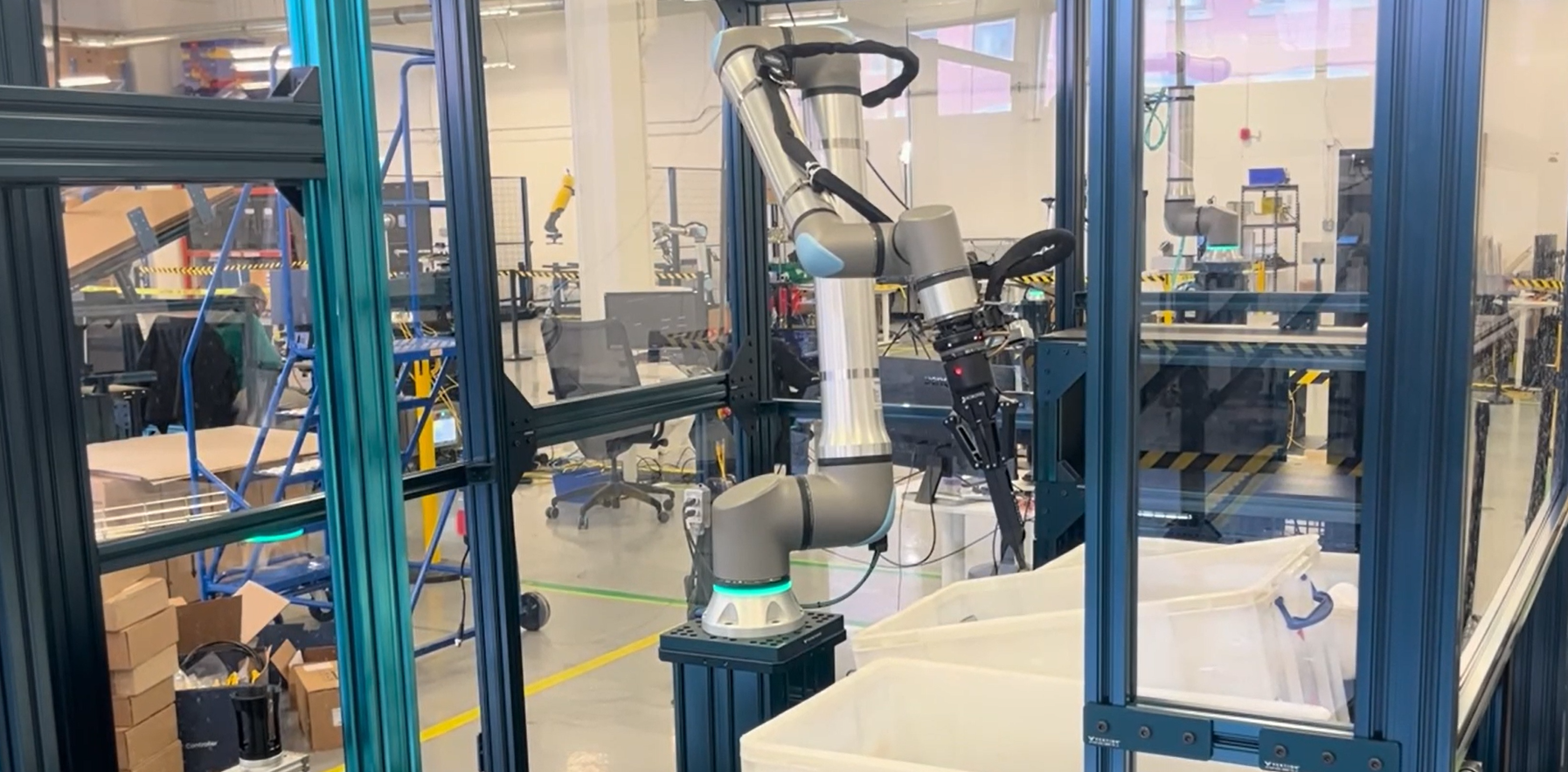
Earlier generative AI features like CAD part recommendation and programming copilot laid the groundwork for faster design, programming, and simulation. Q4 expanded that foundation into the physical world by advancing AI driven execution for real factory environments.
Throughout the quarter, Vention’s technical team completed the final development phases of AI Operator in preparation for early factory installations in 2026. AI Operator brings perception, planning, and adaptive execution into a unified system. With AI, robots gain the ability to recognize unstructured parts, adjust to variation, and perform workflows that typically require significant engineering prowess and support.
These developments move AI Operator closer to human-like capability in real production conditions. Q4 completed the shift from prototype to deployment ready performance, with the first factory installations planned for Q1 and wide-scale roll out throughout 2026.
Developer Toolkit: More Control for Advanced Teams
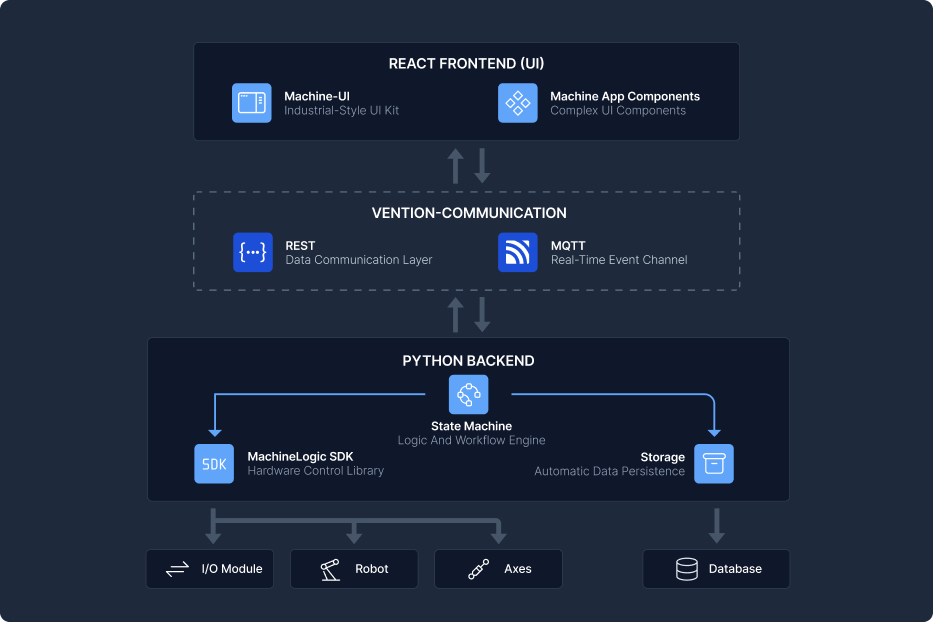
At Vention’s annual Demo Day event, we introduced the Vention Developer Toolkit, a full stack environment for building production grade automation applications. The toolkit gives engineers deeper control through Command Line Interface (CLI), APIs, and a unified development workflow that connects logic, data, interfaces, and hardware.
Developers can define machine behavior with structured state machines, create data models that automatically generate databases and REST APIs, command hardware through the MachineLogic SDK, and build modern operator interfaces using ready made UI components. All applications can be developed locally, synchronized through the CLI, and validated in Vention’s digital twin before reaching the factory floor.
For advanced teams, the Developer Toolkit provides a faster and more scalable way to create custom automation logic, standardize deployment across machines, and integrate Vention systems into broader production environments.
Platform Momentum & Ecosystem Growth
Vention saw continued platform expansion across multiple industries in Q4, driven by increased adoption of digital twins and cloud-based tools to accelerate design validation and reduce project timelines. A client we featured at Demo Day 2025, Solestial, is one strong example of this shift, demonstrated by their use of simulation for virtual validation and risk reduction of their solar cell manufacturing systems.
In the past few weeks, we also registered one of the largest automation orders in Vention’s history, which included 200 robot stations. The customer’s decision was driven by Vention’s capacity to support multi-cell scalability with rapid deployment and consistent, repeatable performance. This reflects a broader move toward platform based automation as organizations seek repeatable deployment methods rather than one off, project based approaches.
Educational engagement increased with the launch of new MachineBuilder courses, which shortened onboarding for manufacturing users and for engineering students. Some universities are now preparing for deeper integration of Vention’s MachineBuilder courses into their robotics and manufacturing programs (keep an eye out for a story in Q1 2026).
As part of our monthly events, Vention hosted a welding webinar with Smooth Robotics and delivered live design demonstrations at FANUC Cobot Day events in Vancouver and Toronto. These sessions helped engineering and operations teams understand how modern cloud based workflows improve deployment speed.
As automation platform adoption continues to grow, more automation hardware companies are joining the Vention marketplace. During the past quarter, we saw the addition of 33 new parts, drastically expanding the plug-and-play gripper offering for robot applications.
State of the Market Report: What Manufacturers Are Planning for 2026
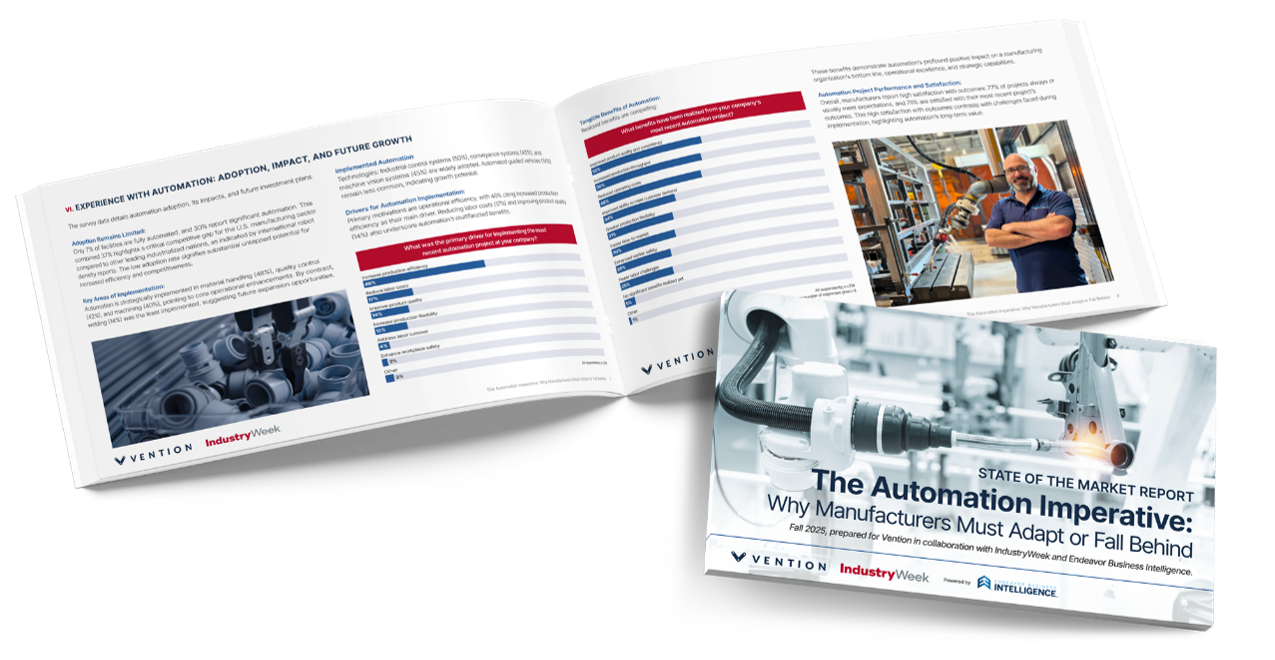
Another major end of year milestone was the publication of the State of the Market report, developed in partnership with Industry Week. The report captured feedback from more than 214 manufacturing leaders and revealed both strong conviction about automation and persistent barriers to adoption.
Key findings include:
- 92% percent of manufacturers consider automation critical for long term competitiveness
- Only 37% have adopted automation at scale
- The primary barriers are not cost, but complexity, talent shortages, and integration uncertainty
These insights align with what Vention sees across its customer base. Manufacturers want automation, but they want it delivered through predictable workflows that are easier to design, validate, deploy, and scale. The data reinforces the growing interest in platforms that consolidate these steps into a unified environment. This shift is expected to accelerate in 2026 as AI becomes more embedded in design and operations.
Looking Ahead to 2026
The evolution from project based automation to platform based automation will continue, driven by manufacturers who want predictable deployment, reusable designs, and clear scalability across facilities. The emergence of AI is accelerating this transition. Manufacturing roles see their function evolving and benefiting: engineers gain faster iteration and stronger validation, operations teams achieve more reliable and scalable deployments and finally, executives gain a clearer model for rolling out automation programs across multiple sites with consistent performance.
In 2026, AI will become an increasingly important part of day to day automation. As Physical AI transitions from controlled testing into live production, developer extensibility and platform-based deployment will become critical enablers, allowing organizations to customize automation to their operations and scale it across entire factory environments.
The foundational work is now in place and the opportunity ahead is significant and exciting for teams ready to modernize how automation is designed, deployed, and operated.


